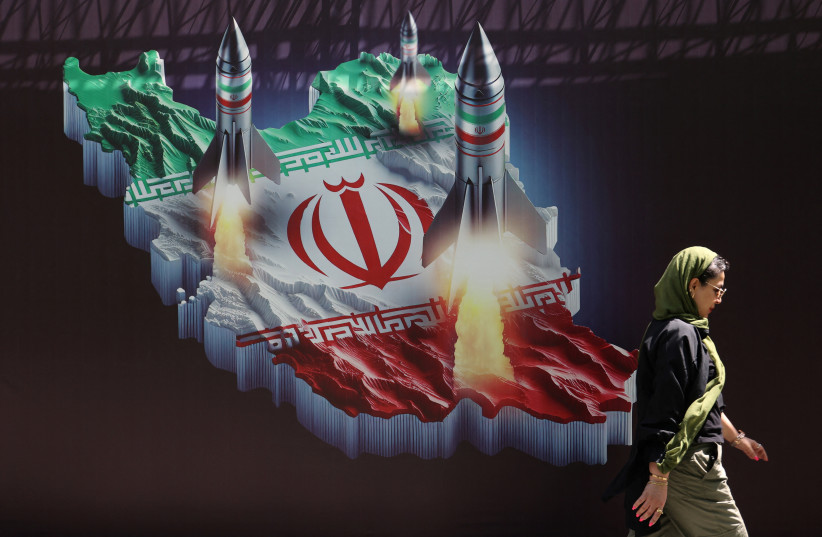
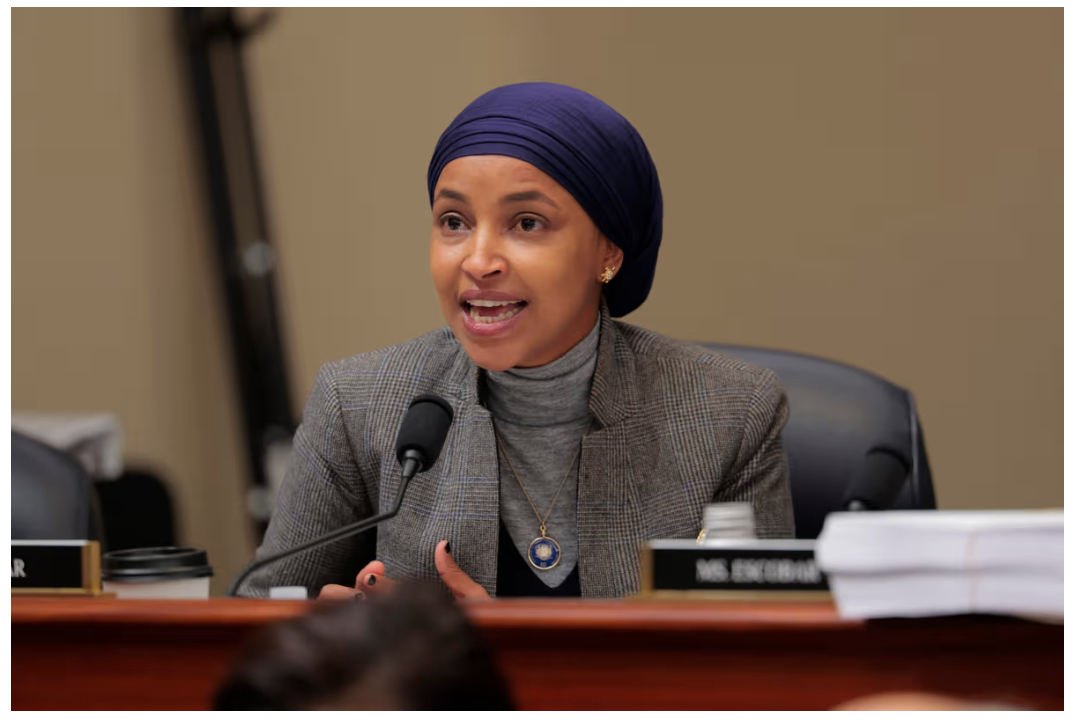
Allahu Akbar says the dead mullahs, but ask those living if they want to join themand the overall answer is not today, not tomorrow, not ever. What a let down, we have no idea why their aspirations are not to plow ahead with their meeting of Allah. What a disappointment!However we will lead the way to their blissful salvation if they so choose.
Canadian doctors have suggested killing euthanasia victims by taking their organs, according to multiple reports, whistleblowers, and public talks. Medical freedom advocates are documenting emerging ties between “medical assistance in dying” (MAID) and organ harvesting.
“The best use of my organs, if I’m going to receive a medically assisted death, might be to not first kill me and then retrieve my organs, but to have my mode of death — as we medically consider death now — to be to retrieve my organs,” said Rob Sibbald, an ethicist of the London Health Sciences Centre in Ontario.
Other Canadian doctors have publicly embraced “death by donation,” and a study came out earlier this year exploring euthanasia programs such as MAID as a means of organ harvesting. Canada legalized euthanasia in 2016, and since then the number of Canadians using MAID to kill themselves has significantly increased.
‘Is the Dead Donor Rule Even Relevant?’
Sibbald’s biography says he co-directs the “Canadian unit of the International Network of the UNESCO chair in bioethics.” During his speech, he suggested blurring the lines on the “dead donor rule,” a long-standing medical ethics guideline requiring that donors die of another natural cause before doctors harvest their organs.
“We’re so invested in this dead donor rule,” Sibbald said. “That rule has become so ingrained in the medical community that we hold it out as a foundational principle. … And I think just as likely there are people who question that value now. And I know there’s perhaps not an appetite to go there, but raising the question — is the dead donor rule even relevant?”
He suggested death may not occur at one particular moment in time, and said the “best use” of organs from patients who are “going to receive a medically assisted death” could be to harvest them while the victim is alive.
“If, to meet your definition of the dead donor rule, you have to consider me dead once you’ve first put me under and you have no intention of bringing me back — well then fine, I can accept that if those are my values,” Sibbald said.
The ethicist appeared to imply that doctors should make this decision on their own, asking forgiveness rather than permission.
“I think legally, yes, we do need an answer, and we’re going to come to that,” Sibbald said. “But of the possible solutions to our pragmatic issues, we can continue to allow physicians to decide and let the conflict go to the courts.”
But Sibbald told The Federalist, “None of my previous comments should be taken as a suggestion that physicians should operate outside the bounds of existing legal or professional ethical standards.”
“Rather, I have suggested that in light of legal developments we should take time to consider whether other legal or professional standards are now also in need of update or reconsideration,” Sibbald said.
Sibbald claimed in a September 2018 article he co-authored for The New England Journal of Medicine that the dead donor rule follows a “perceived requirement to maintain the firewall between what is done for the patient (facilitating a rapid and peaceful death) and what is done for potential organ recipients (retrieving organs that have the least possible injury). … But these principles have less merit in cases of voluntary euthanasia.”
While some MAID recipients “may want to be sure that organ procurement won’t begin before they are declared dead,” others may want “the option of donating as many organs as possible and in the best condition possible,” according to the article.
“Following the dead donor rule could interfere with the ability of these patients to achieve their goal,” the article reads. “In such cases, it may be ethically preferable to procure the patient’s organs in the same way that organs are procured from brain-dead patients (with the use of general anesthesia to ensure the patient’s comfort).”
But harvesting organs from patients who are still living would require an “amendment to the Criminal Code of Canada, which defines medical assistance in dying as the administration of a ‘substance’ by a qualified provider. By this definition,” the article noted, “organ retrieval is not an accepted cause of death.”
Still, patients who emphasize “optimizing the number of organs they can donate are best cared for in an operative setting, where they can be fully anesthetized and where optimal organ procurement is supported,” the article said — noting “patients who prefer to donate their organs after death” have “more flexibility” about where the euthanasia takes place.
Canada is the top country for organ donations via euthanasia. Still, its national health system had an organ shortage in December 2022, with more than 3,700 patients awaiting a transplant. Health officials could be trying to close gaps like these by killing patients to harvest their organs, anti-euthanasia advocates told The Federalist.
Disabled whistleblower Roger Foley, who says he has been pressured to accept euthanasia four times, told The Federalist Sibbald’s speech appears to suggest doctors might harvest organs from live patients.
“His statement is like, ‘We’ll just do it anyway, we’ll let the physicians do it. And after they start doing it, if there’s ever a complaint, then it will go to the courts, and then the courts can decide if this is right or wrong,’” Foley said. “It could be they’re already doing euthanasia by organ harvesting, we just don’t know about it.”
He called MAID a “sliding practice” due to “ableism and disdain for persons with disabilities and the vulnerable.”
“This sliding leads not only towards expansion of eligibility criteria, but also towards euthanasia organ harvesting methods,” Foley said. “The human race is not mature enough to have euthanasia and assisted suicide legalized anywhere. The focus should be on improving supports for vulnerable persons to live and improving palliative care at end of life.”
Heather Hancock, another disabled patient who says doctors pressured her to accept MAID, told The Federalist euthanasia victims are another means for doctors to obtain organs.
“Suddenly organ transplants have gone up since MAID’s been involved. New patients are eligible to be donors,” Hancock said.
She also said killing patients helps fund Canada’s public health care system.
“MAID is a huge money-making business — now they’re saving money on future healthcare,” Hancock said. “They’re literally denying us healthcare treatment and offering us MAID instead.”
Doctors attempted to withdraw life support from one patient multiple times without his consent, according to the Justice Centre for Constitutional Freedoms. One afternoon when the patient’s mother was in the hospital, the doctors denied him oxygen above 60 percent, according to JCCF. The same day, he died. The patient had been involved in advocating for religious and medical freedom. In a similar case, a former Canadian politician said he had to “flee with his family to the United States” because doctors told him they would remove his son who drowned from life support, after which “his organs could then be ‘harvested,’” according to LifeSiteNews.
Hancock said she expects the situation to worsen as restraints on MAID loosen over time. According to The Christian Post, Ontario’s Trillium Gift of Life Network — one of the groups sponsoring Sibbald’s speech about premortem harvesting — tells doctors to ask MAID patients about obtaining their organs.
In Ontario, euthanasia deaths boosted organ donations in 2020. In Quebec, 14 percent of organ donors were MAID victims in 2022. One article in the Canadian Medical Association Journal includes a diagram of the MAID to organ harvesting pipeline. This was from 2019, when euthanasia was only allowed for those with foreseeable deaths. Now, doctors can end the lives of patients with unforeseeable deaths.
A chart showing the pipeline from MAID to organ harvesting. James Downar et al. | Canadian Medical Association Journal
Angelina Ireland is executive director of the Delta Hospice Society, an end-of-life care facility that the Canadian government shut down and then took over for not terminating its patients. The group now advocates against euthanasia. Ireland said the dead donor rule is “all in question.”
“They are now talking about ‘pre-mortem’ interventions to harvest organs of MAID recipients,” Ireland told The Federalist. “That’s the question — what the h-ll is going on?”
Ireland said there is “plenty of room for abuse.” She cited the book “The Red Market,” which traced human trafficking and organ harvesting around the world.
“You can get big, big money on the world market,” she said. “We have opened ourselves up to some horrific stuff.”
Organ trafficking rises from a “desperate need for organ transplantation surgeries” and takes the form of a “lucrative, transnational criminal enterprise,” according to Canada’s Library of Parliament. Trafficked organs constitute up to 10 percent of organ transplants worldwide, the study says. A kidney can range from $50,000 to $120,000.
“Purchasers are normally wealthy persons from developed nations such as Canada,” according to the library. The network often includes a broker between buyer and seller, a “local recruiter,” and “medical professionals and local hospitals performing the illicit organ removal.”
“It is the ‘Canadian cull’ — a systematic elimination of the weak, sick, old, and vulnerable via the state euthanasia program called MAID,” Ireland said. “The Government has taken the most sacred right from its citizens, the power to kill them.”
She said while some Americans complain about private healthcare, socialized medicine also has serious problems.
“In a public health-care system, there are a whole new set of mafioso who are deciding to take a person’s body and soul,” Ireland said. “There is no recourse and no justice.”
Logan Washburn is a former staff writer covering election integrity. He is a spring 2025 fellow of The College Fix. He graduated from Hillsdale College, served as Christopher Rufo’s editorial assistant, and has bylines in The Wall Street Journal, The Tennessean, and The Daily Caller. Logan is from Central Oregon but now lives in rural Michigan.
Every donor is killed in the process, he stated. Revoking your organ donation status from your drivers license is not enough, you must also complete a document of refusal.
President Trump lashed out at Iran’s handling of the Strait of Hormuz since the two-week cease-fire came into force – claiming “That is not the agreement we have!”
“Iran is doing a very poor job, dishonorable some would say, of allowing oil to go through the Strait of Hormuz,” Trump wrote on Truth Social Thursday.
The vital waterway, through which 20% of the world’s oil passes daily, has effectively been closed since the US and Israel launched their first attacks on Iran as part of “Operation Epic Fury” on Feb. 28.
Vessels passing through Strait of Hormuz following the two-week temporary ceasefire.Anadolu via Getty Images
Only nine ships passed through the Strait over the last 24 hours, according to data from the Hormuz Strait Monitor – way down on the daily average of 60 vessels.
Oil traffic through the Strait of Hormuz remains effectively halted despite a U.S.-backed ceasefire that hinged on reopening the critical waterway, raising fresh questions about whether Iran is following through on a central condition of the truce.
A backlog of roughly 3,200 vessels — among them 800 tankers and cargo ships — has built up west of the strait, with ships idling as operators wait for clarity on whether it is safe to pass.
No oil tankers have risked the journey in recent days, according to Matt Smith, an analyst at Kpler, a data and intelligence company.
“We’re not seeing any, any, any oil products passing through there,” Smith said. “So, for all intents and purposes, the strait remains closed. And this is the leverage that Iran has.”
Three vessels passed through the Strait on Thursday, according to Smith, two of them Iranian-flagged and one a dry bulk carrier.
“Iran is doing a very poor job, dishonorable some would say, of allowing Oil to go through the Strait of Hormuz. That is not the agreement we have!” President Donald Trump warned on Wednesday.
A ship is seen passing through the Strait of Hormuz during a two-week temporary ceasefire between the United States and Iran on April 8, 2026. (Shady Alassar/Anadolu/Getty Images)
Nearly 20,000 mariners have been essentially stranded in the Persian Gulf throughout the crisis, according to the International Maritime Organization.
On Wednesday, one Sri Lanka-flagged vessel passed inbound through the strait, while four dry bulk carriers — flagged in Botswana, Liberia, Panama, and St. Kitts and Nevis — and one Iranian vessel sailed outbound, according to Windward AI, a maritime data platform.
The few vessels that are transiting are doing so through a corridor near Iran’s Larak Island rather than standard commercial lanes, according to Windward, with some ships switching off tracking systems as they pass.
At the same time, cargo is increasingly being rerouted through ports in Oman and along the United Arab Emirates’ east coast, adding roughly two weeks to some voyages and increasing costs by about 25%.
Islamic Revolutionary Guard Corps navy personnel stand on a warship during an IRGC marine parade marking Persian Gulf National Day near the Bushehr nuclear power plant in Bushehr, Iran, on April 29, 2024. (Morteza Nikoubazl/NurPhoto)
The continued standstill comes despite President Donald Trump saying the ceasefire hinged on “Iran agreeing to the COMPLETE, IMMEDIATE, and SAFE OPENING of the Strait of Hormuz.”
While the truce has paused U.S. military action, shipping through the critical waterway has yet to resume — underscoring the gap between the agreement on paper and conditions on the ground.
Some 20% of the world’s oil supply typically passes through the strait, and analysts say shipping companies have a far lower risk tolerance than governments, meaning a fragile ceasefire alone is not enough to bring vessels back onto the waterway.
“We don’t know whether the Strait of Hormuz is mined. Even if it isn’t, the risk of being hit by a missile or a drone is a big enough deterrent,” Smith said. “No one’s willing to take the chance.”
He added that insurance constraints are making it difficult for ships to transit even if operators are willing to move.
War-risk insurance remains available in some cases, but at sharply elevated premiums and with added restrictions, further discouraging operators from entering the strait.
Sultan Al Jaber, head of the Abu Dhabi National Oil Company, posted on LinkedIn Thursday: “This moment requires clarity. So let’s be clear: the Strait of Hormuz is not open.”
“Access is being restricted, conditioned and controlled,” he said. “Iran has made clear — through both its statements and actions — that passage is subject to permission, conditions and political leverage.”
Two police officers walk in front of an anti-U.S. billboard depicting American aircraft being caught by Iranian armed forces in a fishing net beneath the words in Farsi, “The Strait of Hormuz will remain closed, The entire Persian Gulf is our hunting ground,” in Tehran, Iran, Sunday, April 5, 2026. (Vahid Salemi/AP Photo)
Meanwhile, Iran is demanding the right to charge a toll of $1 per barrel of oil on board, paid in cryptocurrency, according to the Financial Times.
Iranian state media reported Wednesday that Iran was keeping the strait closed in response to continued Israeli attacks on Hezbollah in Lebanon, which the U.S. claims was not part of the ceasefire.
Still, Vice President JD Vance and President Donald Trump have said Israel will scale down its attacks in Lebanon to allow breathing room for the ceasefire to succeed.
they are.Afraid to sent back to the stone age, they have now agreed to a ten day negotiation period. However we do not know the exact details. But we hope Trump didn’t acquiesce to their demand of keeping their nuclear stockpile, if so, we are back to square one. It is imperative that the United States, not only verify, but resolve the nuclear issue. In other words, Uncle Sam must extract all nuclear materials from the lunatic mullahs – no if ands or buts, period.
Iran submitted their ten point plan which is in direct contrast to the fifteen point plan submitted by the United States.For instance there is a conflict with what Israel can do in Lebanon. Iran says “no bombing”, Israel says phooey on you which is confirmed by V.P. JD Vance.US 15-point peace plan ‘not acceptable,’ Iranian official says. Trump, Iran in ‘challenging’ phase after reaching two-week ceasefire deal
Trump warns US forces will stay near Iran until lasting deal is secured
Two F/A-18 Super Hornets launch from the flight deck of the U.S. Navy Nimitz-class aircraft carrier USS Abraham Lincoln in support of the Operation Epic Fury attack on Iran from an undisclosed location March 3, 2026. (U.S. Navy/Handout via Reuters)
President Donald Trump said late Wednesday that U.S. forces would remain near Iran until a lasting peace agreement is finalized.
In a post on Truth Social, Trump said the U.S. military would be on standby until a “REAL AGREEMENT” with Iran is secured.
“All U.S. Ships, Aircraft, and Military Personnel, with additional Ammunition, Weaponry, and anything else that is appropriate and necessary for the lethal prosecution and destruction of an already substantially degraded Enemy, will remain in place in, and around, Iran, until such time as the REAL AGREEMENT reached is fully complied with,” Trump wrote.
“If for any reason it is not, which is highly unlikely, then the ‘Shootin’ Starts,’ bigger, and better, and stronger than anyone has ever seen before,” he added.
Senator Marco Rubio, a Republican from Florida and US secretary of state nominee for US President-elect Donald Trump, during a Senate Foreign Relations Committee confirmation hearing in Washington, DC, US, on Wednesday, Jan. 15, 2025. The top Republican and Democrat on the Senate Foreign Relations Committee joined in praising Rubio at the Florida senator’s nomination hearing for secretary of state, signaling he’ll face one of the easiest confirmations of President-elect Donald Trump’s cabinet. Photographer: Kent Nishimura/Bloomberg via Getty Images
This is the result of the liberal wackos who allowed our enemies to enter the Heartland.
The glam grandniece of slain Iranian terror mastermind Gen. Qasem Soleimani frequented several US hotspots and lived a lavish life in LA before being scooped up by ICE Friday.
Sarinasadat Hosseiny, 25, and her mother, Hamideh Soleimani Afshar, were arrested after the State Department terminated their permanent resident status and had their green cards revoked due to her ties the terrorist Iranian regime, the agency announced Saturday.
Sarinasadat Hosseiny, 25, the grandniece of terror mastermind Gen. Qasem Soleimani, shows off her sex-appeal on Instagram in a manner at odds with the Islamic government her mother espoused.Sarinasadat Hosseiny/ Instagram
The 25-year-old terror scion’s social media showed she’s enjoyed a luxurious, vacation-centric lifestyle while living in the country her mother referred to as the “Great Satan.”
Hosseiny shared photos of her jetsetting on private planes, sunbathing on yachts, and dancing at music festivals while showing no signs of gainful employment.
For Mehdi Ghadimi, the ideology behind Iran’s ruling system is not theoretical. It was something he was taught from childhood.
“You were told you are a part a small group chosen by God… to revive God’s religion and fight to defend it,” the Iranian journalist told Fox News Digital, describing the message repeated in schools, mosques and state media.
That early indoctrination, he said, framed the world in stark terms: a divine struggle between good and evil, with Iran’s leadership positioned at the center of a religious mission.
Iran’s ruling system is often described in political terms, but critics and former insiders say its core is far more radical — a belief structure rooted in religious absolutism, messianic expectation and a worldview that leaves little room for compromise.
As a new generation of commanders rises within the Islamic Revolutionary Guard Corps following recent military blows under Operation Epic Fury, analysts warn that this ideology may become even more entrenched.
Figures such as Mohammad Bagher Ghalibaf and Ahmad Vahidi are often cited as part of a cohort shaped by years of conflict in Iraq and across the region — one that sees religion, security and survival as inseparable.
A belief system, not just a government
At the center of that worldview is the belief in the Mahdi — a messianic figure in Shiite Islam whose return is expected to usher in a final era of justice after chaos.
Twelver Shiism is the dominant belief for Shias, the Mahdi, identified as the 12th Imam, is alive but hidden and will one day return. Iran’s political system positions the supreme leader as his caretaker.
Critics say that framework gives political authority a religious dimension that can make it difficult to challenge.
Primary school girls in traditional headscarves sit in a classroom, Tehran, Iran, Oct. 1, 1997. (Kaveh Kazemi/Getty Images)
“For the mullahs in Iran, the Mahdi idea is less about personal faith and more about power,” said Lisa Daftari, foreign policy analyst and editor-in-chief at The Foreign Desk. “They use it to suggest that the supreme leader’s views are not just political opinions, but carry a kind of divine weight.”
“The system is set up so that disagreeing with the leader can be portrayed as questioning the Hidden Imam himself,” she said.
“That turns ordinary policy debates into something almost untouchable… you’re no longer arguing with a politician, you’re seen as pushing back against a sacred figure.”
Commanders and members of the Islamic Revolutionary Guard Corps meet with Iran’s Supreme Leader Ayatollah Ali Khamenei in Tehran on Aug. 17, 2023. (Office of the Iranian Supreme Leader/WANA/Reuters)
No real moderates
Ghadimi argues that this structure leaves little room for genuine political diversity.
“Groups labeled as ‘moderate,’ ‘reformist,’ or ‘pro-Western’ are created so that the West can negotiate with them,” he said.
“No one within the structure of the Islamic Republic thinks about anything other than defeating the Western world and establishing Islamic dominance globally.”
From belief to action
For Iran expert Daftari, the Mahdi doctrine also provides a flexible justification for policy.
“A lot of insiders know perfectly well that this language is being used strategically,” she said. “The Mahdi story gives the leadership a way to claim moral and religious cover for decisions that are often about preserving the regime or expanding its reach.”
“When they talk about ‘preparing the ground’ for the Mahdi, that phrase can be stretched to cover almost anything — crushing protests, backing militias abroad or asking people to accept more economic pain.”
“This religious framing makes compromise much harder,” she added. “If you convince your base that you are carrying out a holy mission… backing down can be painted as a betrayal of God’s plan.”
We gave you fair warning, either you heed it or Martyrdom awaits you. What will happen is beyond your wildest dreams. Your aspirations for world conquest will be buried beyond smitherines. Perhaps you don’t think so, but the hell you will see is nothing conpared to the visions of your 72 virgins that awaits you in heaven.
Trump’s 48-hour ultimatum to reach deal on Strait of Hormuz enters day 2: ‘hell will rain down’
President Donald Trump’s 48-hour ultimatum for Iran to reach a deal to reopen the Strait of Hormuz entered its second day on Sunday.
Trump warned the regime that “all hell will rain down” on it if a deal isn’t reached, threatening to target Iran’s energy infrastructure.
“Remember when I gave Iran ten days to MAKE A DEAL or OPEN UP THE HORMUZ STRAIT,” Trump wrote on Truth Social.
“Time is running out – 48 hours before all Hell will reign down on them. Glory be to GOD!” he added.
Trump has demanded Iran fully abandon its nuclear weapons capabilities — including halting enrichment — while also curbing its missile program and regional activity in exchange for potential sanctions relief.
In the mountains of Iran, a clandestine operation was executed with perfection. Our valiant fighters from Seal Team 6, plucked the package from the dark of night so he could see the light of day. The second airman, a weapons systems-officer was extricated out of the Iranian darkeness with dispatch. The impossible operation became a necessity because if captured, the IRGC would string him up for propoganda purposes.
Screenshot
US celebrates successful rescue of F-15E crew member as Trump’s Iran ultimatum ticks down
President Donald Trump’s administration is celebrating the successful rescue of an F-15E crew member who was shot down over Iran on Sunday. Trump’s 48-hour deadline for Iran to reopen the Strait of Hormuz also entered its second day.
US forces locate and evacuate downed airman in Iran
U.S. forces have located and evacuated the missing weapons systems officer who was downed over Iran, two senior US officials and multiple well placed sources in the region confirmed to Fox News.
The airman had been unaccounted for after an F-15E fighter jet was shot down, triggering an intense search-and-rescue operation in hostile territory.
Details remain limited, but reports indicate U.S. personnel reached the service member behind enemy lines in Iran and successfully extracted him, with all personnel now safely out of the country.
More details will be reported as they become available.
"Where Revolution is the Solution" Taking back the Empire