
Inside Iran’s ruling ideology: How a ‘holy mission’ and messianic doctrine fuel regime extremism
New IRGC commanders shaped by years of conflict may entrench the regime’s extremist ideology even further, analysts warn

Published April 5, 2026 2:00pm EDT | Updated
For Mehdi Ghadimi, the ideology behind Iran’s ruling system is not theoretical. It was something he was taught from childhood.
“You were told you are a part a small group chosen by God… to revive God’s religion and fight to defend it,” the Iranian journalist told Fox News Digital, describing the message repeated in schools, mosques and state media.
That early indoctrination, he said, framed the world in stark terms: a divine struggle between good and evil, with Iran’s leadership positioned at the center of a religious mission.
Iran’s ruling system is often described in political terms, but critics and former insiders say its core is far more radical — a belief structure rooted in religious absolutism, messianic expectation and a worldview that leaves little room for compromise.
As a new generation of commanders rises within the Islamic Revolutionary Guard Corps following recent military blows under Operation Epic Fury, analysts warn that this ideology may become even more entrenched.
Figures such as Mohammad Bagher Ghalibaf and Ahmad Vahidi are often cited as part of a cohort shaped by years of conflict in Iraq and across the region — one that sees religion, security and survival as inseparable.
A belief system, not just a government
At the center of that worldview is the belief in the Mahdi — a messianic figure in Shiite Islam whose return is expected to usher in a final era of justice after chaos.
Twelver Shiism is the dominant belief for Shias, the Mahdi, identified as the 12th Imam, is alive but hidden and will one day return. Iran’s political system positions the supreme leader as his caretaker.
Critics say that framework gives political authority a religious dimension that can make it difficult to challenge.
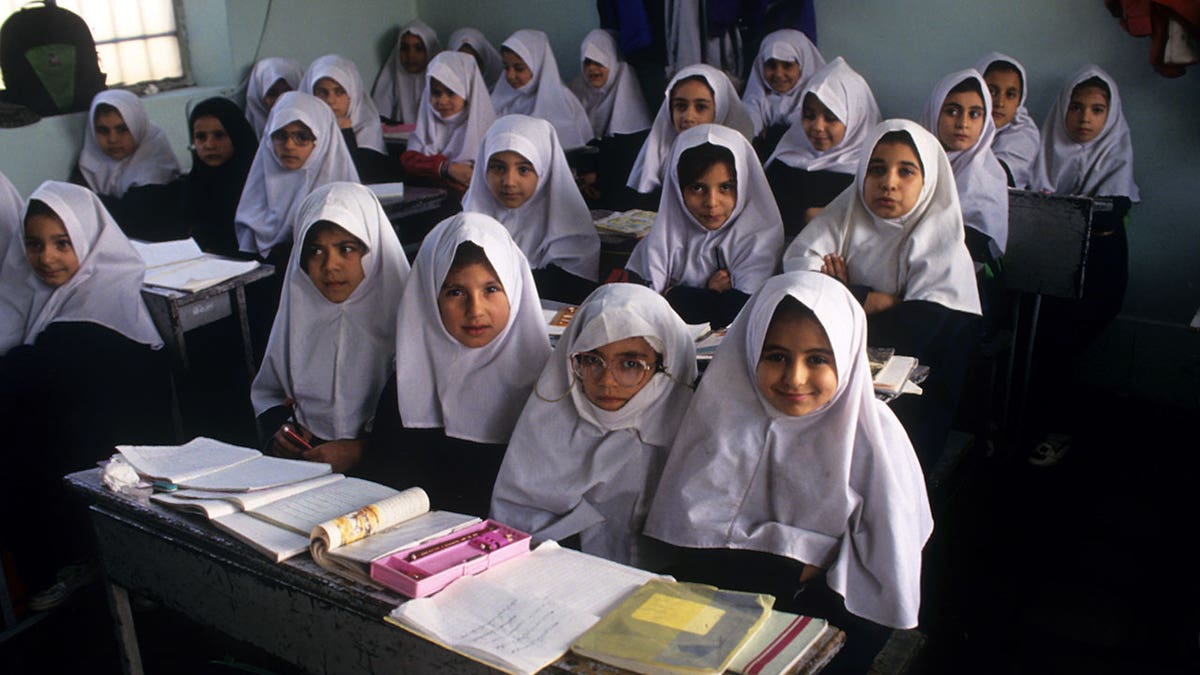
Primary school girls in traditional headscarves sit in a classroom, Tehran, Iran, Oct. 1, 1997. (Kaveh Kazemi/Getty Images)
“For the mullahs in Iran, the Mahdi idea is less about personal faith and more about power,” said Lisa Daftari, foreign policy analyst and editor-in-chief at The Foreign Desk. “They use it to suggest that the supreme leader’s views are not just political opinions, but carry a kind of divine weight.”
“The system is set up so that disagreeing with the leader can be portrayed as questioning the Hidden Imam himself,” she said.
“That turns ordinary policy debates into something almost untouchable… you’re no longer arguing with a politician, you’re seen as pushing back against a sacred figure.”
IRAN’S CEASEFIRE PUSH MAY BE A ‘CYCLE OF DECEPTION,’ ANALYSTS WARN AS SHADOWY FIGURE GAINS POWER
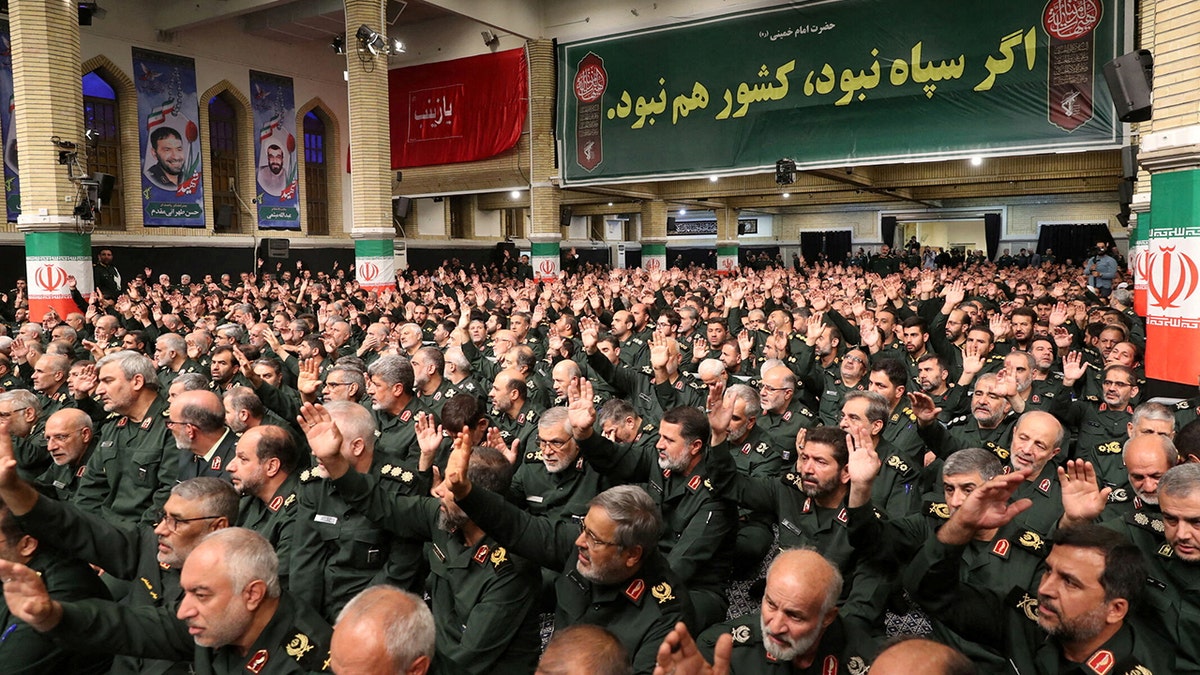
Commanders and members of the Islamic Revolutionary Guard Corps meet with Iran’s Supreme Leader Ayatollah Ali Khamenei in Tehran on Aug. 17, 2023. (Office of the Iranian Supreme Leader/WANA/Reuters)
No real moderates
Ghadimi argues that this structure leaves little room for genuine political diversity.
“Groups labeled as ‘moderate,’ ‘reformist,’ or ‘pro-Western’ are created so that the West can negotiate with them,” he said.
“No one within the structure of the Islamic Republic thinks about anything other than defeating the Western world and establishing Islamic dominance globally.”
From belief to action
For Iran expert Daftari, the Mahdi doctrine also provides a flexible justification for policy.
“A lot of insiders know perfectly well that this language is being used strategically,” she said. “The Mahdi story gives the leadership a way to claim moral and religious cover for decisions that are often about preserving the regime or expanding its reach.”
“When they talk about ‘preparing the ground’ for the Mahdi, that phrase can be stretched to cover almost anything — crushing protests, backing militias abroad or asking people to accept more economic pain.”
“This religious framing makes compromise much harder,” she added. “If you convince your base that you are carrying out a holy mission… backing down can be painted as a betrayal of God’s plan.”
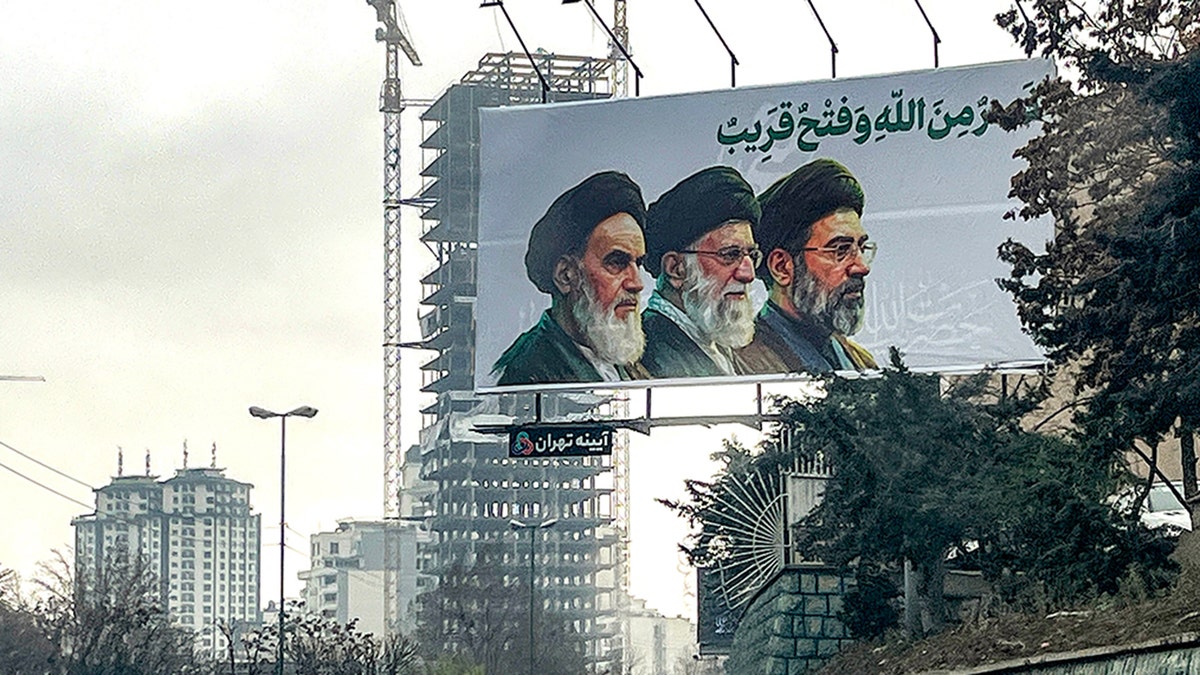
A billboard depicting Iran’s supreme leaders since 1979 is displayed above a highway in Tehran on March 10, 2026. (AFP/Via Getty Images)